
Best Dog Training Methods That Actually Work

Some dogs will sit for a treat in the kitchen and then completely fall apart on a walk. Others look "stubborn" when they are actually overwhelmed, confused, or carrying stress that never gets addressed. That is why the best dog training methods are not the flashiest ones, and they are rarely the harshest. The methods that last are the ones that teach clearly, protect trust, and work with the dog in front of you rather than forcing every furry into the same mold.
For pawrents who want more than surface-level obedience, this matters. A dog is not a robot with a training glitch. Behavior is communication. If your dog is pulling, barking, freezing, guarding, or ignoring cues, there is a reason behind it. Good training does not just suppress the symptom. It builds safety, understanding, resilience, and a working relationship that can hold up in real life.
What the best dog training methods have in common
Despite all the noise online, the best methods tend to share a few core principles. They are humane, science-informed, and individualized. They focus on teaching the dog what to do, not just correcting what not to do. They also respect that learning is affected by environment, health, history, genetics, and emotional state.
This is where many one-size-fits-all programs miss the mark. A confident adolescent dog who snatches socks for fun needs a different plan than a rescue dog who startles at sudden movement. Both may need boundaries. Both may need skill-building. But the path should not look identical.
The strongest training approaches also include the human side of the equation. Dogs do not live in a vacuum. They live with people who have routines, stress, habits, and different levels of experience. If a method only works in a lesson but not in your actual home, it is not finished yet.
Best dog training methods for modern behavior work
Positive reinforcement is the foundation
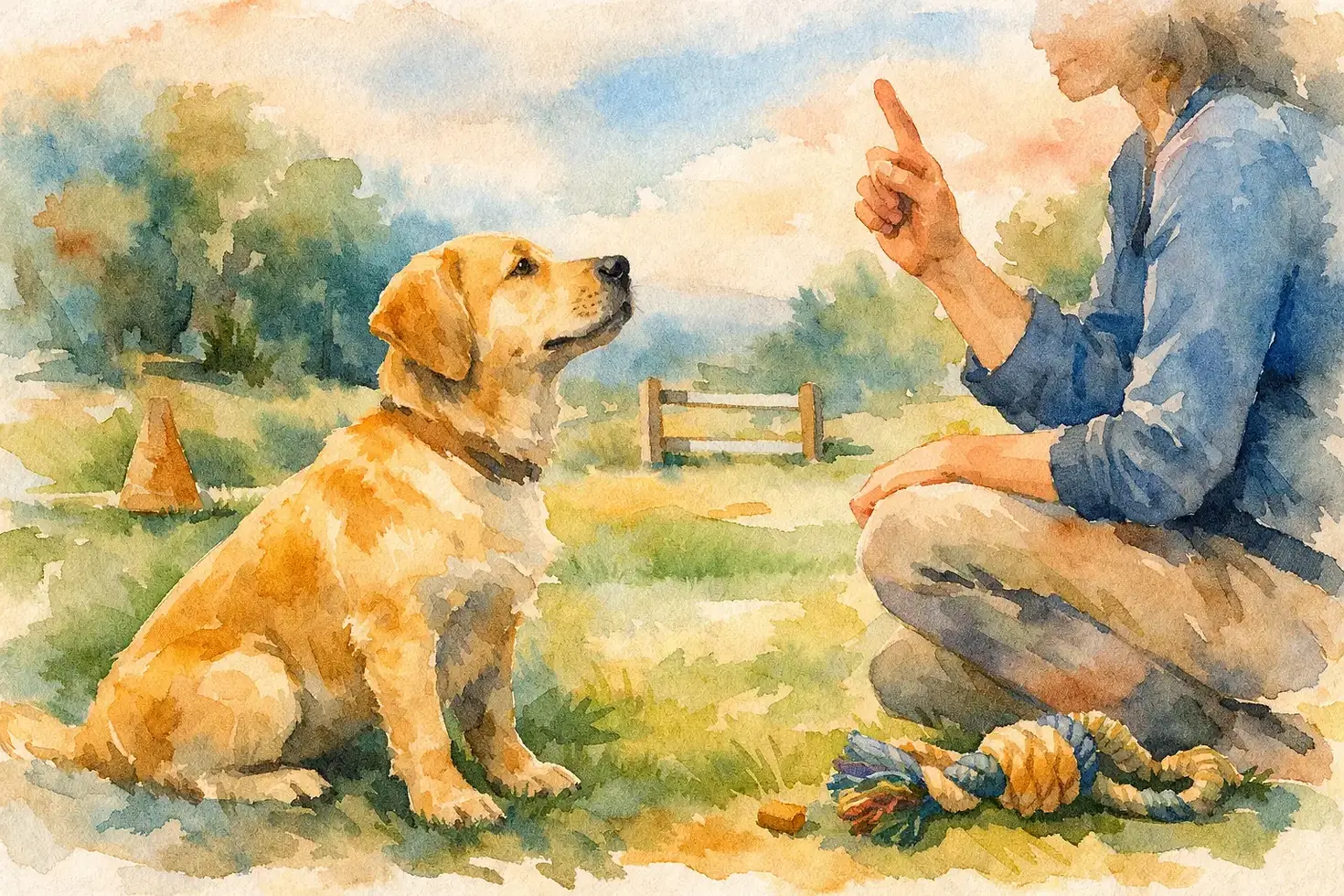
If we are talking about methods that consistently create willing, engaged learners, positive reinforcement sits at the center. That means rewarding behavior you want to see again. Food, play, praise, movement, sniff breaks, and access to life rewards can all count, depending on the dog.
This is not bribery, and it is not permissive. It is teaching. When a dog learns that checking in, walking near you, settling on a mat, or leaving the trash alone leads to something worthwhile, behavior becomes clearer and more repeatable. You are building habits with meaning, not demanding compliance through pressure.
There is nuance here. Reinforcement has to be well-timed, relevant, and gradually adapted to the real world. If a dog will only respond when a cookie is visible, that usually points to a training plan that needs refinement, not proof that rewards do not work.
Management is not cheating
Baby gates, leashes, crates, x-pens, distance from triggers, and adjusted routines are not shortcuts. They are part of responsible behavior work. Management prevents rehearsal of unwanted behavior while your dog is still learning.
If your dog explodes at the front window every afternoon, letting that happen ten times a day is practice. If your puppy keeps stealing shoes, leaving shoes everywhere is setting both of you up to fail. The best dog training methods use management to create cleaner learning opportunities and reduce unnecessary stress.
That said, management alone is not enough. It buys time. It does not replace teaching.
Desensitization and counterconditioning change emotional responses
This is where behavior work becomes more specialized. When a dog is reactive, fearful, or trauma-affected, you cannot train as though the issue is simply disobedience. A dog who panics at skateboard sounds is not choosing drama. That dog is having a real nervous system response.
Desensitization means exposing the dog to a trigger at a low enough level that they can stay regulated. Counterconditioning means pairing that trigger with something positive to change the dog’s emotional association over time. Done well, this work is careful, gradual, and deeply effective.
Done badly, it becomes flooding - too much, too soon, with a dog pushed past coping. That is one reason behavior cases deserve thoughtful handling. Progress often looks quiet before it looks dramatic. Softer eyes, faster recovery, looser posture, and better choices around triggers are meaningful wins.
Relationship-based training creates durability
Relationship-based work can sound soft and vague, but the good version is neither. It means your dog learns that you are relevant, predictable, and safe. Your cues have meaning. Your boundaries are consistent. Your presence helps them organize themselves rather than spiral.
This kind of training pays off in everyday moments. Your dog comes when called because recall has been built through trust and repetition. Your dog settles because calm has been reinforced, not because they have been intimidated into stillness. Your dog can tolerate guidance because your relationship is not built on conflict.
At Amber's Cottage, this is the heart of the work. Education-led, science-based training with a deep respect for the dog’s history and emotional reality tends to produce something far more valuable than quick obedience. It produces a dog who can learn well and a pawrent who can read what the dog is actually saying.
Methods that deserve caution
Some methods can create fast-looking results, but fast is not always the same as healthy. Heavy-handed corrections, intimidation, flooding, and pain-based tools may suppress visible behavior without resolving the reason it is happening.
That trade-off matters. A dog who stops barking because they are afraid to respond is not necessarily calmer. A dog who shuts down in training may look obedient while becoming more anxious, less expressive, or harder to read. For dogs with fear, trauma, or reactivity, coercive approaches can deepen the very problems people are desperate to fix.
This does not mean boundaries disappear. Dogs need structure. They need clear routines, guided choices, and follow-through. But structure and force are not the same thing. The best trainers know how to be clear without becoming confrontational.
How to choose the right method for your dog
Start by asking a better question than "How do I stop this behavior?" Ask what function the behavior serves. Is your dog seeking distance, trying to access something, discharging stress, avoiding pressure, or simply undertrained in a distracting environment? The answer changes the plan.
Age matters. So does breed tendency, health, sleep, environment, and learning history. A young herding dog with no outlet may need skill-building and decompression. A dog recovering from chronic stress may need slower exposure, more rest, and much lower expectations at first. A dog who knows a cue at home but not outdoors may not be defiant at all. They may just need more gradual proofing.
This is also why social media advice can be so misleading. You are seeing a moment, not the whole dog. Real training requires context.
What good training looks like in daily life
Good training is rarely dramatic. It looks like a dog noticing a trigger and staying under threshold. It looks like a shorter recovery after a mistake. It looks like a dog offering eye contact at the door, resting more deeply at home, or walking with less frantic scanning.
It also looks like a human becoming more fluent. You start recognizing the difference between excitement and stress. You notice when your dog is trying but struggling. You become more consistent with cues, timing, and setup. That is real progress. Behavior change is not just about the dog doing better. It is about the team functioning better.
If you are searching for the best dog training methods, look past marketing language and ask what the method is building. Is it creating confidence or conflict? Curiosity or shutdown? Skill or suppression? Is it flexible enough to honor your dog’s needs while still moving you forward?
The right training method should leave your dog safer, clearer, and more connected to you. It should leave you better informed, not more dependent on gimmicks. And it should make daily life feel less like a battle and more like a relationship worth investing in.
The most powerful shift usually happens when pawrents stop chasing control and start building communication. That is where lasting change begins.


Comments