
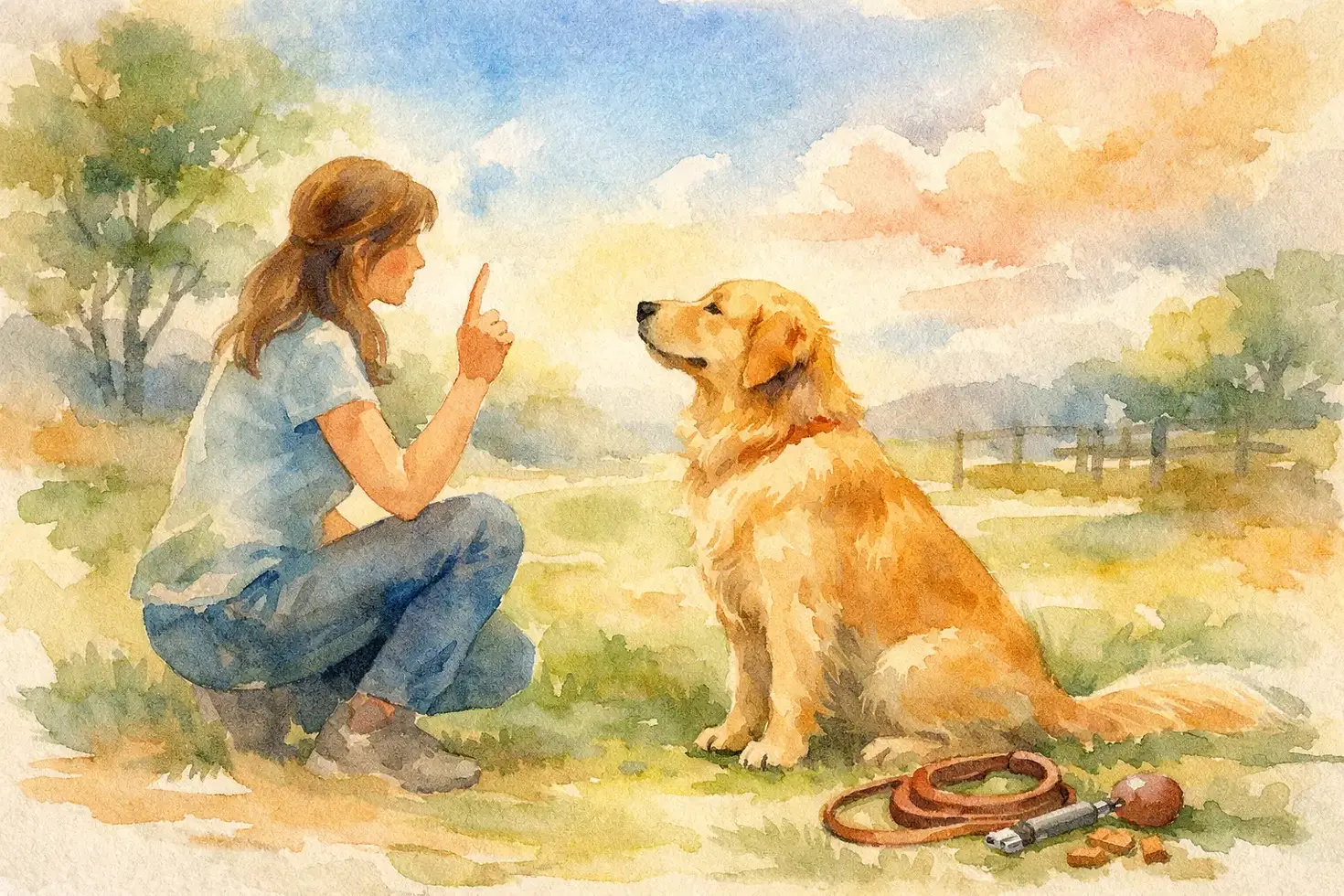
Dog Obedience Training Guide for Real Life
- Jeryl

- May 20
- 6 min read
Your dog sits beautifully in the kitchen, then forgets every cue the second a skateboard rolls by, a guest walks in, or another dog appears across the street. That gap is exactly why a real dog obedience training guide has to go beyond commands. Obedience is not a party trick. It is communication under pressure, built through trust, repetition, emotional safety, and a training plan that fits the actual dog in front of you.
At Amber's Cottage, we care deeply about what obedience means beneath the surface. For some dogs, inconsistency is about excitement. For others, it is stress, over-arousal, trauma history, frustration, pain, or simply being asked to perform skills they have not fully generalized. Pawrents often get told their dog is being stubborn when the truth is far more useful and far more compassionate: the dog may be confused, dysregulated, or practicing a behavior that has accidentally been reinforced for months.
What a dog obedience training guide should actually teach
A good training guide should not just tell you how to get a sit, down, or stay. It should help you understand why your dog can do a cue in one setting and completely fall apart in another. Dogs do not naturally transfer learning the way humans assume they will. A sit in the living room is not automatically the same sit at the park, in the vet lobby, or when your front door swings open and visitors rush in.
That is why obedience training has to include three layers. First, your dog needs to understand the behavior itself. Second, your dog needs to learn the cue in different environments. Third, your dog needs enough emotional regulation to respond when life gets loud, tempting, or stressful. If one of those layers is missing, reliability crumbles.
This is also where humane, science-led work matters. If a dog is shut down, intimidated, or flooded, you may see compliance in the moment, but not genuine learning. Lasting obedience comes from clarity and safety, not pressure for pressure's sake.
Start with the relationship, not the command list
Many pawrents begin with a checklist: sit, stay, come, heel, place. Those skills matter, but the relationship comes first. If your dog does not trust your feedback, does not understand how reinforcement works, or spends most of the day overstimulated, even simple obedience can feel fragile.
Relationship-based training is not soft or vague. It is practical. Your dog learns that paying attention to you is worthwhile, that cues are clear, and that success is achievable. That foundation creates a dog who is more likely to check in, recover from mistakes, and stay engaged instead of spinning off into the environment.
This is especially important for sensitive dogs, adolescent dogs, rescue dogs, and dogs with behavior histories. The old idea that every dog should respond to the same protocol ignores biology, learning history, stress thresholds, and temperament. Real training is individualized because real dogs are.
Build obedience in this order
If you want results that hold up in everyday life, train in a sequence that respects how dogs learn.
1. Teach engagement before precision
Before worrying about a perfect heel or a long duration stay, teach your dog to orient to you. Eye contact, name response, hand targeting, and simple check-ins create the habit of partnership. A dog who automatically reconnects with you is far easier to guide than a dog who is mentally gone the moment the environment gets interesting.
2. Keep cues clean and consistent
Pick one word for each behavior and stick to it. If sit also means sit down, park it, and can you sit please, your dog is sorting through human noise rather than learning efficiently. Everyone in the home should use the same cue and reward the same behavior.
Timing matters just as much. Mark and reward the exact moment your dog gets it right. If your timing is late, you may accidentally reinforce standing up, jumping, or drifting out of position.
3. Train the behavior before adding difficulty
A common mistake is raising the challenge too fast. Pawrents will teach down in the den, then try it immediately during a busy walk. That leap is often too big. Change only one variable at a time. Add distance, then duration, then distraction, not all three at once.
4. Generalize on purpose
Dogs need practice in many places with many pictures. Work in the hallway, driveway, front yard, quiet sidewalk, car park, friend's house, and eventually busier spaces. If your dog struggles in a new setting, that does not mean the training failed. It means the environment is part of the lesson.
The core obedience skills that matter most
Not every family needs competition-level precision. Most households need dependable everyday skills that support safety and calm living.
Sit and down are useful because they give your dog an organized default behavior. Stay builds patience and impulse control, but it should be trained gradually and honestly. Recall is non-negotiable for safety, though it often takes the longest to make truly reliable. Loose-leash walking matters because daily walks shape behavior more than most people realize. Place or settle can be life-changing for dogs who struggle with visitors, meal prep chaos, or constant pacing.
Leave it and drop it deserve far more attention than they usually get. These are not just obedience cues. They are safety tools for sidewalks, countertops, children's toys, and all the mysterious things dogs find before we do.
Why obedience falls apart in real life
When a dog ignores a cue, the reason matters. Sometimes the behavior was not fully learned. Sometimes the reinforcement history is weak. Sometimes the environment is simply too difficult. And sometimes what looks like disobedience is actually distress.
A dog lunging at the end of the leash may not be choosing defiance. That dog may be over threshold and unable to process a known cue. A dog who breaks stay when a stranger enters may not be stubborn. They may be conflicted, worried, or too aroused to hold still. A dog who will not come when called may have learned that recall predicts the end of fun, a bath, nail trims, or being put in the crate.
This is where nuance matters. Better obedience does not always come from asking louder or correcting harder. Often it comes from lowering difficulty, improving reinforcement, changing the setup, and addressing the emotional state driving the behavior.
A practical dog obedience training guide for daily routines
The most effective training usually does not happen in one long session. It happens in tiny pieces woven through ordinary life.
Ask for a sit before the leash goes on. Practice a short stay before placing the food bowl down. Reward your dog for settling while you answer emails. Use recall games in the yard. Reinforce loose-leash walking for the first two minutes of every walk instead of waiting until your dog is already pulling like a freight train.
Short sessions work better because they protect clarity and motivation. Three minutes of focused success is worth far more than twenty minutes of repetition after your dog is mentally cooked.
If your dog makes mistakes, resist the urge to label the session a failure. Information is useful. If your dog can stay for ten seconds but not twenty, you found the edge. If your dog can walk politely on a quiet street but not near the school pickup line, you found the current threshold. Good training plans are built from honest observations like these.
When obedience needs behavior support
Some dogs do not need stricter obedience. They need a deeper behavior lens. If your dog shows reactivity, panic, shutdown, resource guarding, handling sensitivity, or intense frustration, obedience work should be adjusted around those realities. Otherwise, you risk training over distress rather than helping the dog through it.
This is why modern behavior work matters so much. Trauma-informed, relationship-centered training recognizes that nervous systems shape learning. A dog who feels unsafe cannot access the same thinking brain as a dog who feels regulated. That does not excuse unsafe behavior, but it absolutely changes the path forward.
For these dogs, progress often looks different. Before expecting polished heel work, you may need to build decompression, predictability, resilience, and body-based calm. That is not lowering the standard. That is setting the dog up to truly meet it.
What pawrents should expect from themselves
Dog training is not about becoming a perfect handler. It is about becoming a clearer one. Your consistency matters, but perfection is not required. What helps most is curiosity, patience, and a willingness to notice patterns instead of reacting to every hard day like it defines your dog.
Some dogs move fast. Others need a slower pace and a more customized plan. That is normal. The goal is not to copy someone else's timeline. The goal is to create reliable communication, stronger trust, and behavior that holds up in the life you actually live.
If you keep your training humane, specific, and honest, obedience becomes less about control and more about partnership. And that kind of progress does not just look better. It feels better for everyone at both ends of the leash.
The best training moments are rarely the flashy ones. They are the quiet choices your dog makes because they feel safe enough, clear enough, and connected enough to choose you.


Comments