
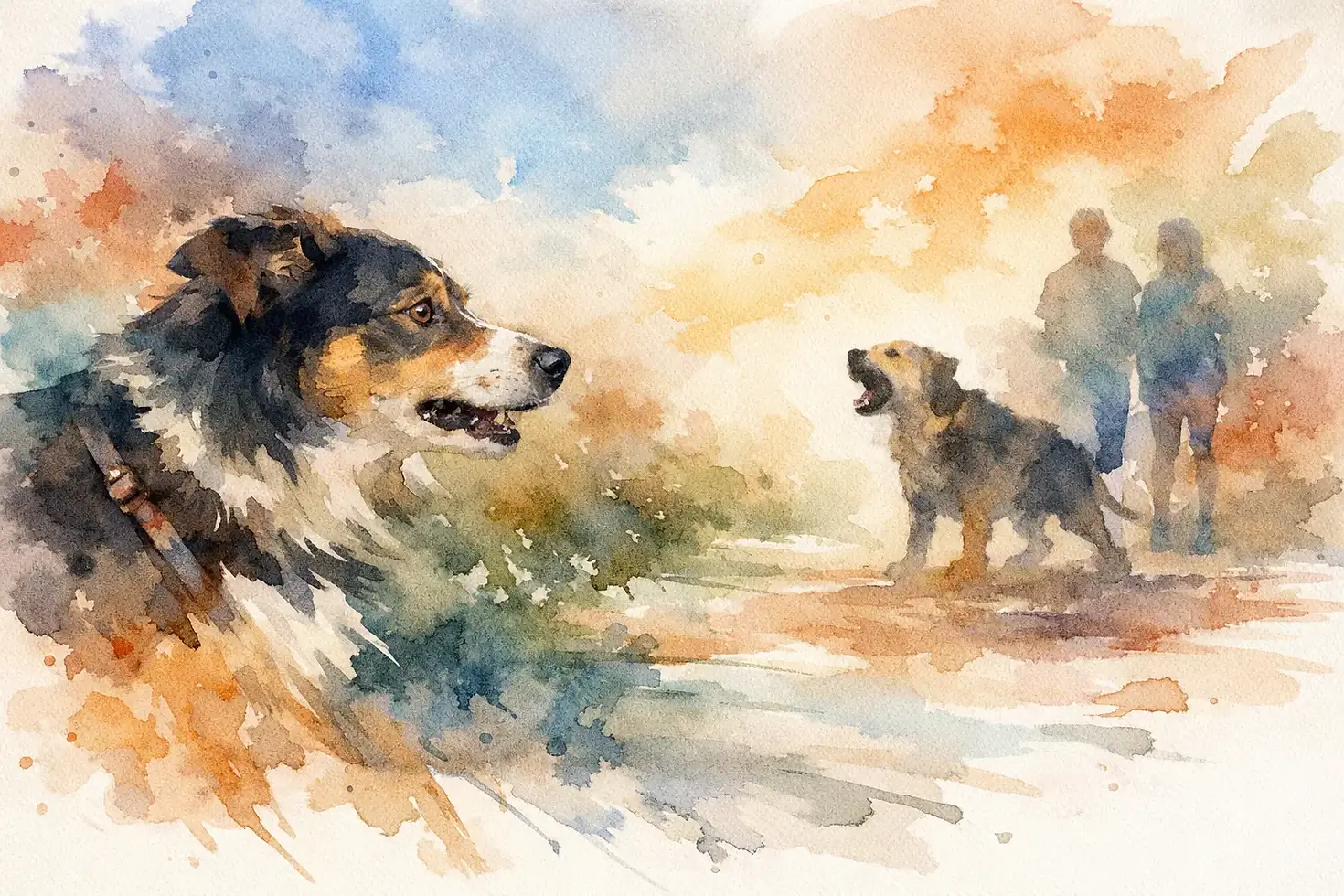
Why Is My Dog Reactive? What It Really Means

The moment your dog explodes at the end of the leash, it can feel personal, embarrassing, and honestly a little heartbreaking. If you’ve been asking, why is my dog reactive, you’re probably not looking for a cute label. You want to know what your dog is feeling, what set it off, and whether life can get easier for both of you.
It can. But the answer usually isn’t “because your dog is stubborn,” “dominant,” or “bad.” Reactivity is a response, not a personality flaw.
What reactivity actually is
Reactivity is a dog’s oversized response to a trigger. That trigger might be another dog, a stranger, a bike, a sound, a car door, being touched unexpectedly, or even the anticipation of something stressful. Some dogs bark and lunge. Some freeze, whine, spin, hide, growl, mouth the leash, or look wildly “hyper.” Different dogs show it differently, but the common thread is this: their nervous system is struggling to cope in that moment.
That matters because behavior is information. When a dog reacts, they are not giving you a hard time. They are having a hard time.
Why is my dog reactive? The real reasons are usually layered
Most reactive dogs are not reacting for one simple reason. It’s often a stack of factors that build over time.
Fear is a huge driver
A lot of reactivity is rooted in fear, even when it doesn’t look fearful. Barking, lunging, and charging forward can read as bold, but many dogs use big behavior to create distance. In plain terms, they’re saying, “That thing feels unsafe, and I need it to go away.”
This is one reason punishment backfires so often. If a dog already feels unsafe, adding pain, intimidation, or harsh corrections may suppress the display for a moment, but it rarely changes the emotion underneath. In some dogs, it makes the emotional association worse.
Frustration can look almost identical
Not every reactive dog is scared. Some are deeply frustrated. They may want to greet another dog, chase movement, or reach a person, and the barrier of a leash or window sends them over the edge. The behavior can look dramatic, but the internal experience is different.
This is where nuance matters. A fearful dog and a frustrated dog can both bark and lunge, but they do not need the exact same plan.
Genetics and temperament play a role
Some dogs are simply more sensitive, more intense, more vigilant, or quicker to respond to stimulation. That isn’t a moral failing, and it isn’t something you caused by loving them wrong. Breed tendencies, inherited traits, and baseline nervous system sensitivity all shape how a dog moves through the world.
Training matters, of course, but biology matters too. Good behavior work always respects both.
Early experiences matter, but so do later ones
A dog doesn’t need a dramatic backstory to become reactive. Sometimes it comes from under-socialization or poor social experiences during key developmental periods. Sometimes it starts after repeated overwhelm, chaotic environments, inconsistent handling, pain, or one truly bad incident.
And sometimes the issue grows quietly. A dog sees too many triggers too close, too often, and their stress bucket keeps filling. Then one day the reactions seem to come out of nowhere.
Pain and health issues are often missed
If your dog has become more reactive, especially suddenly, discomfort should be on the table. Pain changes tolerance. So do GI issues, skin irritation, hormonal shifts, poor sleep, and sensory decline. Dogs in pain are not “less trained.” They are less comfortable.
This is one of the biggest trade-offs in behavior work. People often want to jump right into training, but if the body is struggling, the brain cannot do its best learning.
Why your dog seems fine sometimes and not others
This is one of the most confusing parts for pawrents. Your dog may ignore another dog on Tuesday, then melt down at the exact same setup on Thursday.
That doesn’t mean they’re manipulating you. It means behavior is contextual.
Distance matters. Surprise matters. Fatigue matters. Hunger matters. The number of triggers that already happened that day matters. Whether your dog was able to decompress matters. A dog who can handle one jogger at 100 feet may not handle three joggers at 25 feet after a stressful car ride.
This is why generic obedience advice often falls flat. If we reduce reactivity to “make the dog sit,” we miss the larger picture of nervous system load, learning history, and emotional safety.
Common signs your dog is over threshold
By the time barking and lunging show up, your dog is often already overwhelmed. The earlier signs are quieter and easy to miss, especially if nobody has taught you to look for them.
Watch for hard staring, closing the mouth, stiff posture, scanning, sudden sniffing that looks disconnected, refusing food, pulling forward, slowing down, pinned ears, tucked tail, panting when it isn’t hot, dilated pupils, whining, or an inability to respond to cues they usually know.
These moments matter. This is where good handling changes outcomes. If we wait for the explosion, we’re always late.
Why “socialization” doesn’t always fix it
A lot of well-meaning advice tells people to expose reactive dogs to more dogs, more people, more places. Sometimes that helps. Sometimes it does the opposite.
Healthy socialization is not flooding. It is not forcing interactions. It is not hoping your dog will “get over it” through repetition alone. For many sensitive dogs, repeated overwhelm rehearses the very pattern you want to change.
Better behavior work focuses on safety, distance, predictability, recovery, and thoughtful exposure. The goal is not to make your dog tolerate everything instantly. The goal is to help them build resilience without pushing them past what they can process.
What actually helps a reactive dog
There is no magic trick here, but there is a solid path forward.
First, lower the amount of overwhelm your dog experiences. That might mean walking at quieter times, creating more distance, skipping packed pet stores, using visual barriers, or changing your route. Management is not failure. It is skillful support.
Next, start paying attention to patterns. What are the triggers, at what distance, in what environments, after what kind of day? This is where personalized care matters so much. Reactive behavior is rarely random, and handwritten observation often tells you more than assumptions ever will.
Then, work on emotional change, not just surface obedience. Yes, useful skills matter. A turn-away cue, leash handling, pattern games, and reinforcement for checking in can be incredibly helpful. But the deeper goal is helping your dog feel safer, more organized, and more capable around triggers.
This is where relationship-centered, science-led behavior work shines. At Amber’s Cottage, this is exactly why education has to sit beside training. If pawrents only learn what to do, but not what their dog is communicating, progress stays fragile.
Why quick fixes usually disappoint
Reactive dogs are often sold tidy promises: a stronger correction, a special collar, a board-and-train that “solves” the issue in days. I understand the appeal. When life feels stressful, certainty sounds comforting.
But behavior change that lasts usually asks for patience, consistency, and honesty about the dog in front of you. Some dogs make rapid progress. Others need slower, steadier support. Some may always need a little more space than the average dog. That is not a failed dog. That is simply a dog with specific needs.
The healthiest goal is not perfection. It’s more safety, more recovery, more trust, and more moments where your dog can move through the world without feeling like everything is too much.
When to get professional help
If your dog’s reactions are intense, escalating, unpredictable, or affecting daily life, get support sooner rather than later. The right professional should look beyond obedience and ask better questions about environment, stress, medical factors, history, and handling.
You want someone who sees your dog as a whole being, not a problem to overpower.
That kind of work is slower than a flashy fix, but it’s kinder, more accurate, and far more likely to create meaningful change.
If your furry is reactive, take a breath. Your dog is not broken, and you are not failing because this feels complicated. Sometimes the most powerful shift happens when we stop asking, “How do I shut this down?” and start asking, “What is my dog trying to survive, avoid, or communicate right now?”


Comments