
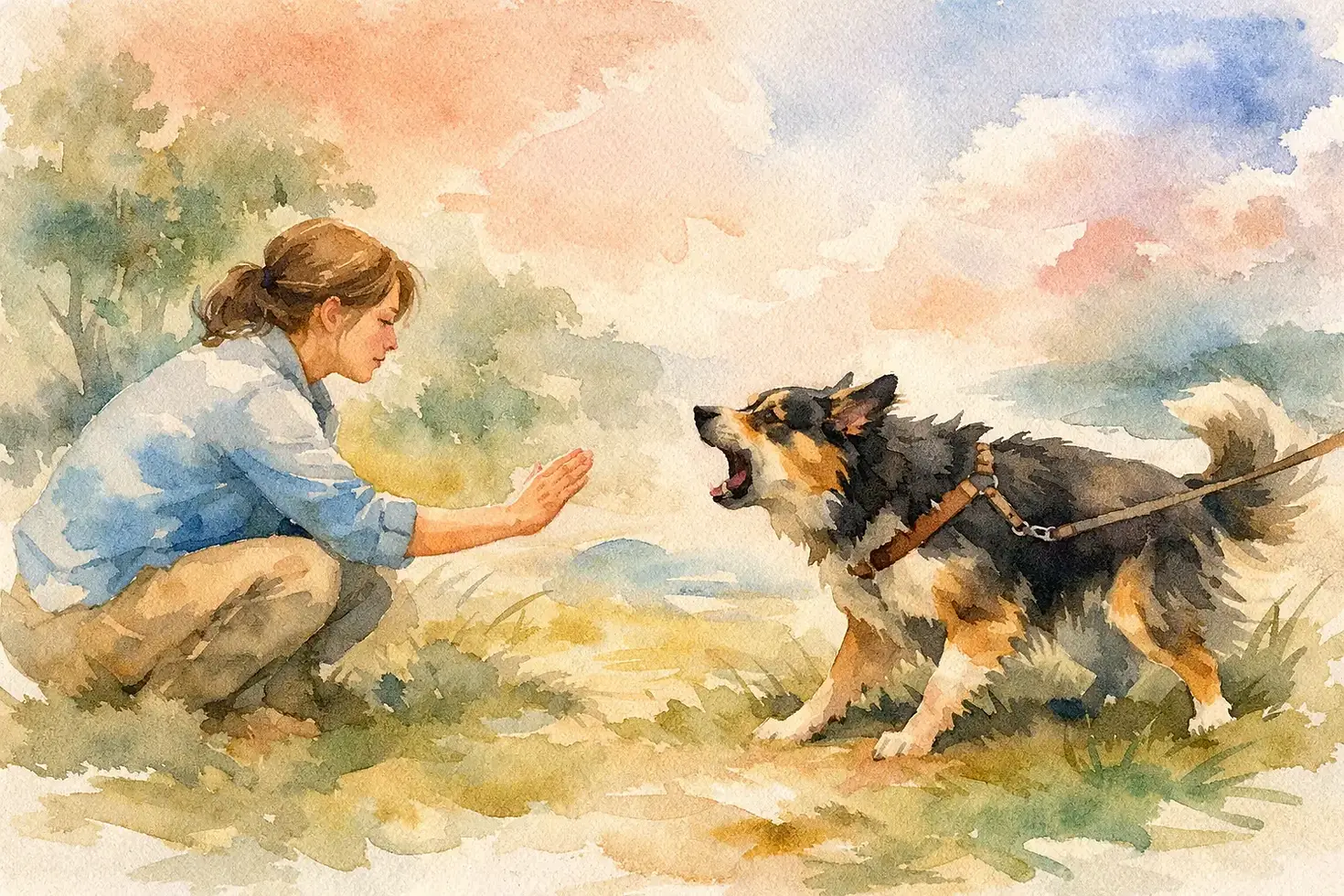
How to Train a Reactive Dog Gently

The walk starts fine, then a dog appears at the end of the block and suddenly your sweet furry is barking, lunging, spinning, or shutting down. If that sounds painfully familiar, you are not failing your dog. And if you are searching for how to train a reactive dog, the first thing to know is this - reactivity is not disobedience in a costume. It is communication.
That distinction changes everything.
A reactive dog is not trying to give you a hard time. Your dog is having a hard time. Sometimes the trigger is another dog. Sometimes it is people, bikes, noises, touch, confinement, or even changes in routine. The outward behavior may look dramatic, but the root is often stress, frustration, fear, overwhelm, or a long learning history that taught the dog the world feels unsafe.
At Amber's Cottage, this is where we refuse the tired old script. Reactive behavior is not something to suppress into silence. It is something to understand, support, and reshape through relationship, science, and carefully built resilience.
What reactivity actually means
Reactivity is an exaggerated response to a trigger. That response can look loud and explosive, but it can also look frozen, avoidant, hypervigilant, or frantic. Not every reactive dog is aggressive, and not every aggressive dog is reactive. The difference matters because training should match the function of the behavior, not just the appearance.
A dog who barks and lunges because he is scared needs a different plan than a dog who screams from frustration because he cannot greet. A dog with a trauma history may need an even slower, more layered approach. This is why generic advice often falls flat. The internet loves one-size-fits-all fixes. Real dogs do not.
How to train a reactive dog without making it worse
If you want lasting change, start by thinking in terms of nervous system safety, not control. Your goal is not to force your dog to "deal with it." Your goal is to help your dog notice a trigger, stay under threshold, and learn that better choices are possible.
Threshold is the point where your dog can still think, respond, and learn. Over threshold, the brain shifts into survival mode. Once that happens, cues often fall apart, food may stop working, and the reaction gets bigger. That is not stubbornness. That is physiology.
So the first part of training is not flashy. It is management.
Management means preventing repeated explosions while your dog learns new skills. That might mean walking at quieter hours, creating more distance from other dogs, using visual barriers, changing routes, or skipping certain environments for a while. Some pawrents worry this is avoidance. It is not. It is smart training. Every rehearsal of reactive behavior strengthens the pattern. Every successful, calm repetition weakens it.
Start with regulation before obedience
Many reactive dogs do not need stricter obedience first. They need help settling, recovering, and feeling safe enough to learn. Foundational regulation work often makes more difference than asking for a perfect heel past a trigger.
That can include teaching your dog to take food calmly, orient back to you, breathe through pauses, move away with you without tension, and decompress after stress. It can also mean looking hard at sleep, enrichment, pain, health, and daily load. A dog with poor rest, chronic stress, or untreated discomfort is carrying a heavier emotional backpack into every training session.
This is one of the most overlooked truths in behavior work. Training does not happen in a vacuum. The walk is only one slice of your dog’s life. If the rest of the day is chaotic, under-enriched, over-social, or physically uncomfortable, the reaction you see outside may be the final spillover.
Build new associations, not just better manners
Once management is in place and your dog can stay under threshold more often, you can begin behavior change. This is where people often rush. Please do not.
When your dog sees a trigger at a workable distance, you want that moment to predict something safe and positive. For one dog, that means food appears when the trigger appears. For another, it may mean permission to move away, engage with a toy, sniff, or check in with you. The specific reinforcer matters less than the principle: trigger predicts support, not panic.
Over time, the emotional meaning of the trigger can shift. That shift is what creates durable change. If you only train the surface behavior, you may get temporary compliance with a stressed nervous system underneath. If you change the emotional response, you get a dog who is genuinely coping better.
There is a trade-off here. This work is slower than compulsion-based methods that prioritize outward control. But slower does not mean weaker. It means more humane, more stable, and far less likely to crack under pressure.
The mechanics matter more than people realize
If you are working on how to train a reactive dog, your timing, distance, and setup matter enormously. A great technique used too close to a trigger will fail. A brilliant reward delivered too late will confuse the picture. A session that goes on too long can push a dog from capable to flooded in minutes.
That is why short, intentional sessions tend to beat marathon training. Spot the trigger early. Increase distance before your dog escalates. Mark and reinforce calm noticing, head turns, soft body language, or voluntary check-ins. End before your dog is depleted.
Progress is rarely linear. Some days your dog will look amazing. Some days a trash truck, a poor night of sleep, or one surprise off-leash dog will change the entire equation. That does not erase the work. It simply means behavior is alive, not mechanical.
What not to do with a reactive dog
Punishment can suppress visible behavior while leaving the underlying stress untouched or even intensified. A leash pop may stop the bark in the moment, but if the dog now associates other dogs with pain or pressure, reactivity often grows sharper, not softer.
Flooding is another common mistake. Taking a reactive dog to a crowded park so he can "get used to it" is not exposure therapy. It is often overwhelm dressed up as training. Exposure only helps when the dog stays under threshold and has a sense of safety and agency.
It is also worth saying this clearly: socialization is not the answer to every reactive case. Some dogs do not need more greetings. They need less pressure, more clarity, and carefully protected space.
When professional help makes the biggest difference
Some reactivity cases are straightforward. Many are not. If your dog has a bite history, severe panic, redirected aggression, intense handling sensitivity, or a trauma background, you will save time and heartache by working with a qualified behavior professional early.
Look for someone who can explain the why behind the plan, not just hand you a protocol. Good behavior work should feel individualized. It should account for health, environment, learning history, recovery time, and your dog’s emotional profile. It should also coach the human end of the leash with as much care as the dog.
Because yes, your nervous system matters too. Dogs read us beautifully. If every walk feels like a battle, both ends of the leash start bracing before the trigger even appears. Skilled support can help you rebuild confidence together.
How to know training is working
Success is not only the absence of barking. Sometimes the early wins are quieter than that. Your dog recovers faster. He notices a trigger and looks back at you. She can eat near a formerly difficult stimulus. The body stays looser. The walk no longer feels like you are carrying a live wire.
These changes count. In fact, they are often the real markers of progress.
A reactive dog does not need to become a social butterfly to have a beautiful life. Some dogs will always need more space, more support, and more thoughtful handling. That is not a failure. That is respectful care. The goal is not to turn your dog into someone else’s dog. The goal is to help your dog feel safer, function better, and trust that you will listen when the world feels too loud.
If you are in the thick of it, please hear this from someone who lives and breathes behavior work: your dog is not broken, and you are not behind. Start with compassion. Add structure. Protect threshold. Reward what you want to grow. Let the relationship do its quiet, steady work.
That is where real change begins.


Comments